Fall is when a lot of home growers start their first fish ferment — fish scraps, a jar, something to feed the garden through the last weeks of the season. The recipes online mostly agree on the broad strokes and quietly disagree, or just stay silent, on one detail that actually determines whether the batch turns out consistent: how much acid a given batch of fish scraps actually needs.
Fish isn’t one raw material — it’s several, with different chemistry
Fisheries research documents a real, measurable difference between fatty fish and white fish by-products. Whole fatty fish — the oily cuts, sprats, sand eels and similar — carry a higher protein and fat content, and correspondingly lower water and ash content, than white-fish offal (heads, frames, skin from leaner species). That’s not a minor footnote. Ash content is the proxy for mineral load, and mineral load is what determines how much acid it takes to drive a batch down to a safe, stable pH.
The actual formula, and what it implies
FAO’s own fish-silage documentation gives a working relationship: the acid load needed scales as roughly L = 0.25 + 0.3 × (% ash). In plain terms — the more mineral content (ash) in your raw material, the more acid it takes to reach a stable pH, and that relationship is close to linear, not a flat dose that works for every bucket of scraps. A batch built from leaner, higher-ash material needs measurably more acid than a batch built from fattier, lower-ash material, even at the same total weight.
This matters because the safety threshold itself is not negotiable: fish ferments need to reach pH 4 or below to reliably suppress bacterial action, and with formic acid specifically, the target is pH 3.6–4. A fixed “use this many tablespoons of vinegar per pound of fish” recipe, applied across different raw material, can land on either side of that line depending on what kind of fish scraps actually went into the jar.
Safety line: pH ≤ 4
Formic acid target: pH 3.6–4
What this means heading into fall stock-up season
None of this is an argument against fermenting your own fish fertilizer — plenty of growers do it successfully, season after season. It’s an argument for treating “fish scraps” as a variable input rather than a standard one, and testing pH directly rather than trusting a recipe written for a different cut of fish than the one in your bucket. A kitchen pH strip and a thorough mix, done on the actual batch in front of you, tells you more than any fixed ratio can.
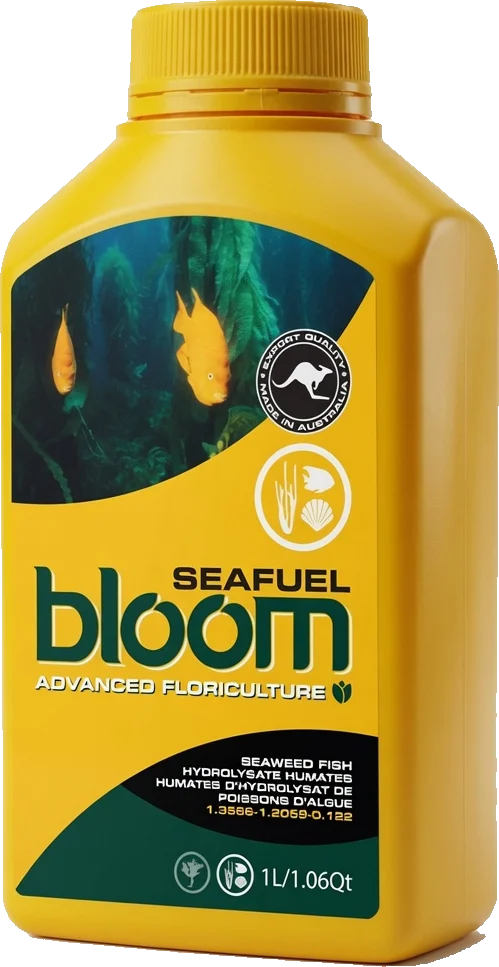
If that variability is more than you want to manage this fall, a bottled hydrolysate — Bloom’s own Seafuel is made from a single consistent process, not whatever scraps happened to be on hand — sidesteps the question entirely. That’s a convenience trade-off, not a claim that one approach works better in the garden than the other.
A simple check that catches most problems
If you’re fermenting this fall regardless, the single most useful habit is also the cheapest: test pH directly with a strip or meter after mixing, stir thoroughly so acid reaches every pocket of material, and test again a day or two later once things have settled. Don’t rely on smell as a proxy for done — smell tells you about fermentation progress, not about whether the batch actually reached a stable, safe pH. The two aren’t the same measurement, and a batch can smell “ready” while still sitting above the threshold that actually matters.
It’s also worth weighing your raw material roughly by type before you start, rather than after something goes wrong. A batch that’s mostly oily, fatty cuts is a different acid-demand problem than a batch that’s mostly lean heads and frames — and knowing which one you’re working with before you add acid is a lot easier than troubleshooting a half-fermented bucket two weeks in.