
Specialty collections — bonsai, orchids, succulents, anything grown in small numbers with close attention — tend to attract trace-mineral products that promise a long list of “beneficial elements”: cobalt, silicon, selenium, sodium, vanadium, titanium, aluminum, and others, usually bundled together in one bottle under a full-spectrum label. The word “beneficial” is doing a lot of work in that pitch, and it’s worth knowing that the published evidence behind these ten or so elements isn’t remotely equal. Some have real, replicated science. Several have almost none.
Beneficial doesn’t mean essential, and it doesn’t mean proven
Plant science draws a real distinction between nutrients a plant cannot complete its life cycle without (the roughly seventeen essential elements) and a separate, smaller list of elements sometimes grouped as “beneficial” — ones that can help under specific conditions without being required. A 2023 review assessing the evidence behind ten commonly cited beneficial elements ranked the strength of that evidence, and the spread is wide: silicon has the strongest and most replicated support, demonstrated across rice, wheat, maize and tomato for drought, salt and disease tolerance. Selenium’s evidence is also described as strong. Cobalt’s support is moderate, and tied to one specific, well-understood job. Sodium’s benefit is described as weak-to-moderate and limited mostly to salt-tolerant plant types under drought stress. Vanadium and titanium are flagged as weak, with titanium in particular having no standardized dosing established anywhere in the literature. Aluminum’s evidence is described as contradictory, with most of the published work actually documenting toxicity rather than benefit.
What “real evidence” looks like when it exists
Cobalt is the clearest example of a genuine, narrow beneficial-element case. It’s required by nitrogen-fixing bacteria living on legume roots, which depend on cobalt-containing cobalamin to run three specific enzymes. Deficiency in those plants shows up below roughly 0.02–0.04 milligrams of cobalt per kilogram of shoot tissue, and the corrective application rate in published agronomy sits at 1.8 to 145.6 grams per hectare — a precision, trace-level dose aimed at a specific biological job, not a splash of “extra minerals.” That’s what a real beneficial-element intervention looks like: a narrow target, a known mechanism, and a dose small enough to be measured in grams across an entire hectare.
What this means for a specialty collection
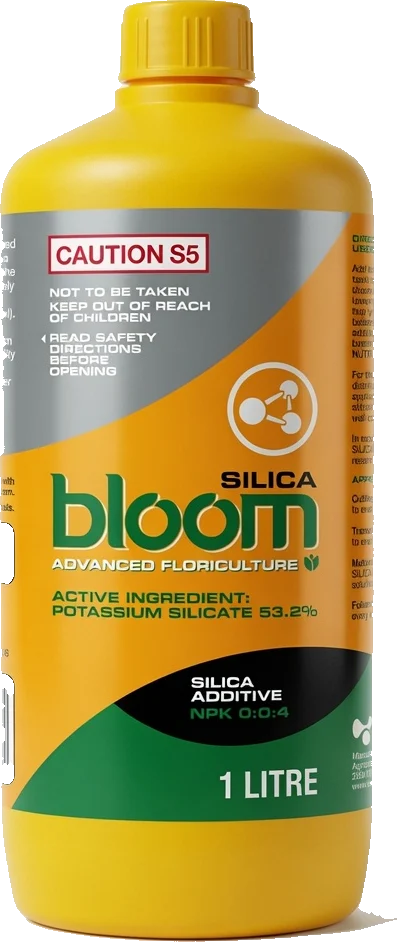
If silicon is the thing you actually want — and for stem strength, disease tolerance or stress resilience in a prized specimen, it has the strongest published case of the ten — a product built specifically around silicon is a more defensible choice than a scattergun blend that includes it as one ingredient among several with far weaker evidence behind them. The same logic applies to any of the other elements on this list: find out which one actually has a documented case for the problem you’re solving, and buy that, rather than assuming a long ingredient list is doing more for the plant than a short, specific one. More elements on a label isn’t the same claim as more evidence behind any one of them.
Reading a trace-mineral label with this in mind changes what questions are worth asking. A long ingredient list with no individual concentrations listed is harder to evaluate than it looks — there’s no way to tell whether cobalt is present at a legume-relevant trace level or at a level that does nothing at all, and the same goes for selenium, vanadium or any of the others. A label that states what it’s targeting and at what rate is giving a collector something to actually evaluate against the published evidence; a label that leans on the word “full-spectrum” and stops there usually isn’t. For a specialty collection where a single plant represents years of attention, that’s worth five extra minutes before anything goes into the water. It’s a small amount of homework against the time already invested in the plant itself, and it’s the difference between supplementing on evidence and supplementing on the hope that more ingredients on a label adds up to more help in the pot.