
A 2026 meta-analysis of seaweed-extract biostimulants — 198 peer-reviewed studies, over 2,000 treatment-control comparisons — found that powder formulations outperformed liquid ones on average yield response: +22.6% for powder against +15.3% for liquid. For a specialty collector running terrariums, mounted epiphytes, or other small, precisely dosed setups, that number is worth sitting with honestly, because it cuts against the format Bloom actually ships in.
What the number is actually comparing
The powder figure comes from a much smaller sample than the liquid one — 299 comparisons against 1,714 — across a pool of products that vary enormously by species, concentration, and extraction method before formulation even enters the picture. It’s a real, statistically meaningful average across the field, not a controlled head-to-head of “the same extract, dried versus kept liquid.” A powder concentrate and a liquid concentrate aren’t usually the same product at two moisture levels; they’re frequently different products from different manufacturers with different everything else, averaged into two buckets. The honest reading is “powder-format products as a category outperformed liquid-format products as a category in this dataset” — not “drying any given liquid extract would improve it.”
Why precision collections still want a bottle, not a scoop
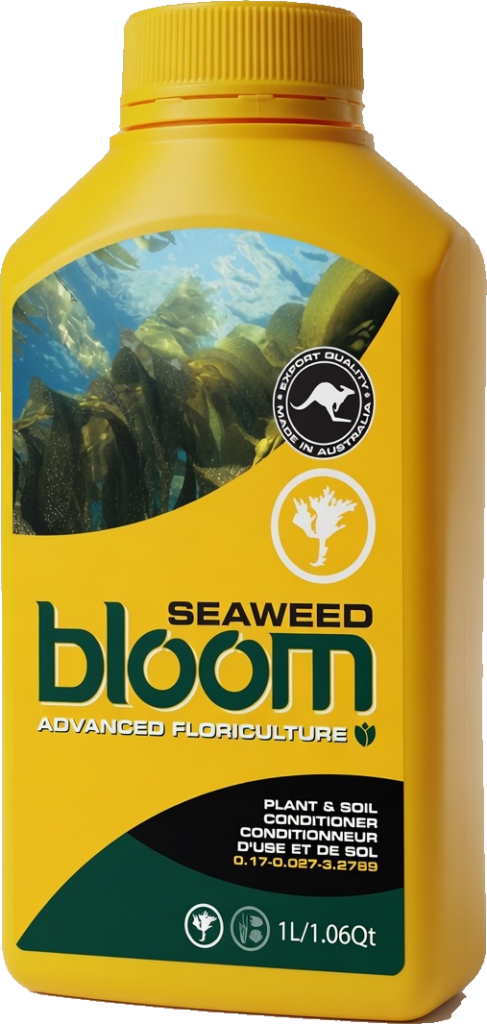
Even taking the average at face value, format trades one advantage for another. A powder has to be weighed and dissolved correctly every time, at whatever tiny gram quantity a small reservoir calls for — and the smaller the vessel, the harder a kitchen scale is to read accurately at the fractions-of-a-gram level a terrarium or a single mounted epiphyte actually needs. A liquid concentrate measured by the milliliter with a graduated syringe is a far easier thing to dose precisely and repeatably at small scale, which is exactly the problem a collector running several delicate setups is actually trying to solve. Bloom’s SEAWEED ships as a liquid concentrate — guaranteed analysis 0.17-0.027-3.278, derived from a single declared input, Durvillaea potatorum, run at 1 ml/L — and that format choice is a genuine trade against the meta-analysis’s own average, not a hidden strength being quietly claimed as a win.
299 vs. 1,714
There’s a second reason the trade is worth making at this scale, separate from the measurement problem: a powder has to actually dissolve before a plant can use any of it, and dissolution rate, particle size, and water temperature all introduce their own variability into exactly how much active material ends up in solution at the moment it’s applied. A liquid concentrate skips that step entirely — what’s in the bottle is already in solution, in a known ratio, every time. For a bulk field application where a grower is mixing hundreds of gallons at once, the labor savings and shelf stability of a dry powder can outweigh that. For a handful of terrariums or a shelf of mounted staghorns, the arithmetic runs the other way.
The stakes of that measurement gap scale with how little margin a setup has to absorb an error. A broadacre field tolerates a slightly-off scoop across a thousand gallons; a two-liter terrarium reservoir or a single hand-misted mount doesn’t have that buffer, and a dosing mistake shows up fast in a vessel that small. That’s the same reasoning that applies to any precision-dosed small reservoir, whatever the active ingredient — the smaller the total volume, the more a measurement error moves the actual concentration a plant experiences. A liquid concentrate at a fixed ml/L rate turns that into a simple syringe reading; a powder turns it into a scale reading at a mass most kitchen scales weren’t built to resolve.
It’s also worth being clear about what the trade isn’t buying back. Choosing liquid over powder doesn’t recover the average yield-response gap on its own — it trades a modest average performance difference for a large reduction in dosing error at small scale, which is a different kind of win than the one the meta-analysis measured. A collector who can dose a powder as accurately as a liquid, at whatever scale they’re running, would reasonably expect the powder-format average to show up in their results too. The point here isn’t that liquid is secretly better; it’s that the honest comparison has two variables in it — average formulation performance, and how reliably a grower can actually hit the intended dose — and only looking at the first one misses half of what decides a real outcome on a shelf of small pots.
None of this erases the meta-analysis’s finding — powder-format products really did average a stronger yield response across the literature, and a sheet pretending otherwise would be cherry-picking. What it does is put that average next to the actual job a precision collection needs done: a small, repeatable, accurately measurable dose, applied to a vessel too small for a scale to serve well. On that specific job, the format that scores lower on average is still the more usable tool in hand — which is a more honest case for a liquid concentrate than simply not mentioning the comparison at all.
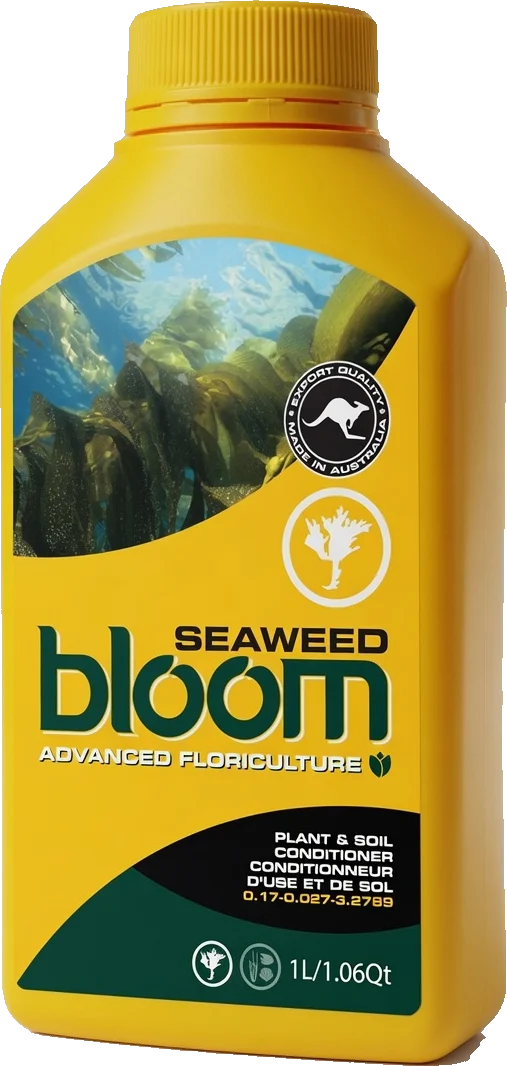
Sources: Pérez-Oñate CJ, et al. Crop yield responses to seaweed extract-based biostimulants depend on application strategy, formulation, and extraction methods: a meta-analysis. Frontiers in Plant Science 17:1803269 (2026). Guaranteed analysis per Bloom SEAWEED label artwork.