Plenty of home gardeners who collect seaweed from the shore skip the bucket-and-steep step entirely and just dig the fronds straight into a garden bed, or toss them on the compost pile. It feels like the same move as making a kelp tea — same raw material, same idea of feeding the soil — but the chemistry behind burying seaweed and the chemistry behind steeping it are not the same process, and they don’t release the same thing on the same timeline.
What a steep actually pulls out, in hours
A cold-water steep works fast on the soluble fraction of seaweed tissue: the sugars (mainly mannitol) and the free ions — potassium, sodium, and the rest — leach into water readily, which is why a steeped tea shows measurable mineral content after just a day or two. What a quick steep does not get at easily is the largest structural fraction of the plant: alginic acid, which makes up 15–45% of a brown seaweed’s dry weight depending on species, sits in the cell wall as an insoluble matrix and physically encloses most of the plant’s other polysaccharides. That fraction needs real breakdown — heat, extended time, or microbial action — not a quick soak, to let go of what’s bound up with it.
What burial does instead
Burying whole seaweed in a bed, or composting it, skips extraction altogether and relies on soil microbes to do the breakdown work over weeks to months rather than hours. That’s a completely different release curve. The minerals aren’t leached out quickly into a liquid you apply right away — they come free gradually, as the structural matrix decomposes, on a schedule set by soil moisture, temperature and microbial activity, not by how long you let a bucket sit.
Neither route is wrong, but they answer different needs. A gardener who wants a quick nutrient boost before a growth spurt should be steeping and applying a liquid, not waiting on buried fronds to break down. A gardener building soil organic matter and structure over a season has the opposite priority, and raw buried seaweed is a reasonable way to do that — it’s a soil-building input, not a fast feed, and it’s worth knowing which job you’re actually asking it to do.
What’s physically present either way
The raw material itself varies by species on a dry-weight basis: ash content runs roughly 15–35% depending on which brown seaweed you’ve collected, potassium 1.3–3.8%, magnesium 0.5–0.9%. That’s the ceiling on what either route can ever release — a steep gets at the soluble slice of it quickly, burial gets at more of the total over time, and neither gives you a fixed, known number the way a bottled, declared product does.
That’s not a reason to skip the shovel and the compost pile — building soil biology over a season is real, worthwhile work that a bottled extract isn’t trying to replace. It’s a reason to stop treating “I dug some kelp into the bed” and “I steeped some kelp into a tea” as the same gardening move, because the plant on the other end of that bed is working on two very different timelines.
Why the fall version of this question matters more
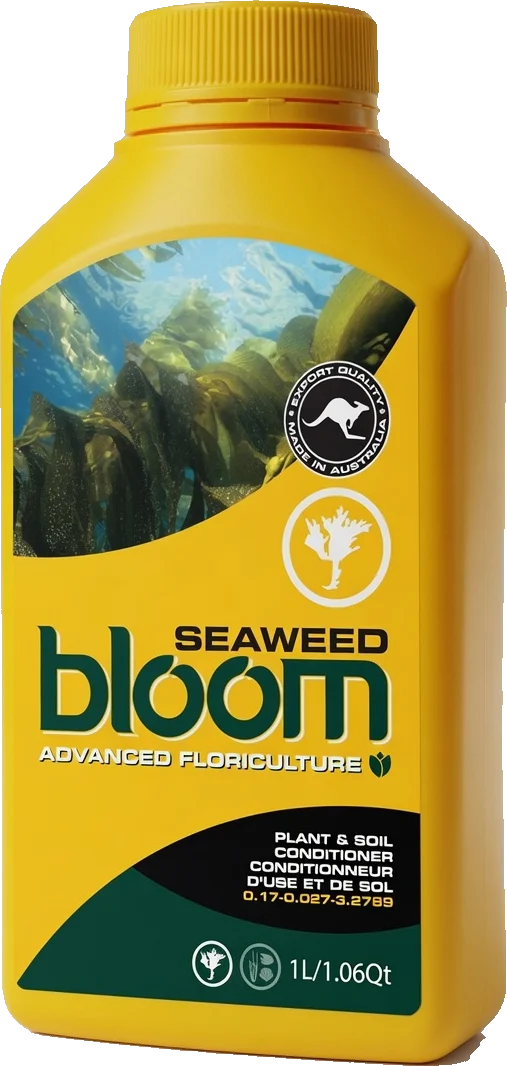
The timing question gets more pointed heading into fall, when a lot of home composting and bed-digging happens anyway. A gardener burying seaweed into a bed in October is banking on weeks to months of microbial breakdown before that nutrient load is actually available — which, depending on your climate, may mean it doesn’t finish releasing until well into next spring’s soil-warming, not in time for anything planted this fall. A gardener who actually wants calcium, potassium or magnesium working this season, rather than next, is better served by the fast-acting route: steep it, or reach for an already-declared liquid extract with a known concentration and a known timeline.
Composting and burying raw seaweed is still a perfectly good use of a free, local input — it adds organic matter and feeds soil biology on its own terms, regardless of whether the nutrient-release timing lines up with any particular planting. The point isn’t to pick one method as superior across the board; it’s to stop assuming “I put seaweed in the ground” answers the same question as “I fed my plants seaweed,” because the two statements are true on completely different clocks.