
The Seaweed Species With a 99.8% Yield Jump Isn’t the One in Our Bottle
If you spend enough time in the seaweed-biostimulant literature, you eventually run into a number that stops you: one species, in the largest meta-analysis of the field to date, is associated with a 99.8% yield increase. That’s not a typo and it’s not a rounding error — it’s a real, published figure. It’s also not the species on Bloom’s own label, and that gap is worth explaining rather than papering over, especially for a grower who’s going to see “seaweed extract” on more than one bottle this season and assume they’re all backed by the same data.
What the biggest seaweed study ever run actually found, by species
A 2026 meta-analysis pooled 198 peer-reviewed studies and 2,021 independent treatment-control comparisons on seaweed extract biostimulants — the largest dataset of its kind. Broken out by species, the yield-response figures varied enormously: Ascophyllum nodosum came in at +16.3% (the most precisely estimated result, with by far the largest evidence base behind it), Gracilaria at +24.9%, Kappaphycus at +19.2%, Laminaria at +27.8%, Ecklonia maxima at +6.7%, and Padina at an eye-catching +99.8%. Six genera, six very different numbers, from the same rigorous pooled analysis.
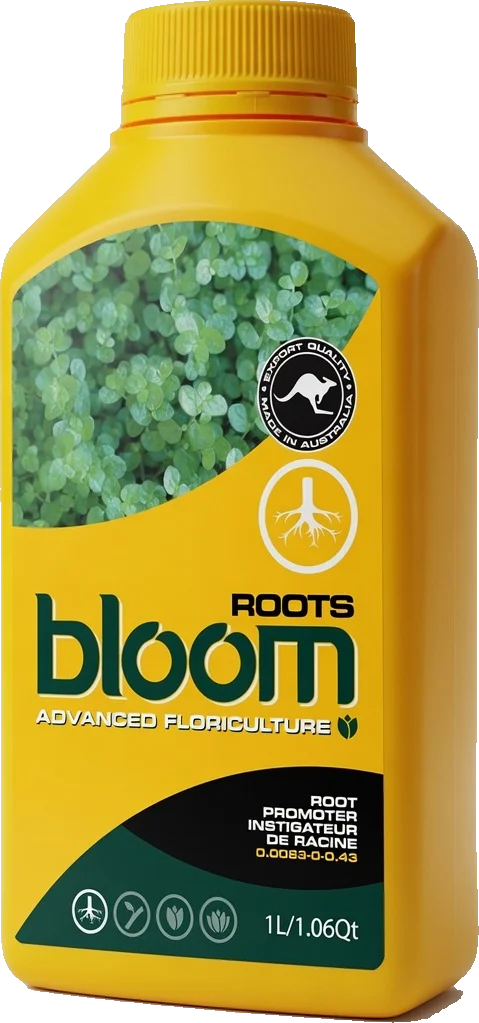
Durvillaea potatorum — the species Bloom Roots and Bloom Seaweed both declare as their sole input — does not appear in that species table at all. Not a small number, not an asterisk-flagged low-confidence entry. Absent. The largest dataset ever assembled on this category of input simply doesn’t contain enough studies on our declared species to generate its own line.
Why we won’t borrow the headline number
It would be easy to pull +99.8% into copy and let the reader assume it applies broadly to “seaweed extract,” including ours. It wouldn’t be honest. Padina is a different genus with its own biology, studied in a different, apparently smaller set of trials than the heavily studied Ascophyllum nodosum — and a result that large, from a thinner evidence base, is exactly the kind of number that deserves more scrutiny before anyone leans on it, not less. The same caution applies in the other direction: we’re not going to claim our product underperforms because its species sits outside the table either. The honest position is simply that the pooled literature hasn’t generated a species-specific number for Durvillaea potatorum yet, at the scale this analysis operated at.
What the same dataset does tell a hydro grower
The absence of a species-specific line doesn’t mean the analysis has nothing useful to say about how a seaweed input is actually used in a tent or grow room. Across all 198 studies, soil- and fertigation-applied seaweed extract outperformed foliar spraying on average — 19–21% versus 15.5% — which is a genuinely practical finding for anyone deciding whether to drench or spray. Extraction method mattered too: alkaline hydrolysis and water extraction both produced statistically significant yield gains pooled across the literature, while several other processing routes did not reach significance. Those are real, usable findings from the same analysis that leaves our own species unlisted — they just don’t license a specific percentage for a specific bottle.
What this means in the tent
None of this changes what’s on Bloom’s own labels: Roots at 0.0083-0-0.43 (0.5 ml/L, 1 ml/L as a root dip) and Seaweed at 0.17-0.027-3.278 (1 ml/L), both declaring Durvillaea potatorum as the sole input. What it does is set a boundary on what we’ll claim about the species behind those bottles. Seaweed-extract category science is real and growing, and some of the application-method and processing findings above are worth acting on regardless of species. But a specific yield percentage belongs to the specific species, formulation, and trial that produced it, and the honest move when your own species isn’t in that table is to say so, not to borrow the biggest number in the room because it happens to be in the same general category of product.
If a future edition of this meta-analysis, or a dedicated trial, eventually adds a Durvillaea potatorum line, we’ll print that number — with the same caveats about formulation and process that apply to every other species in the table. Until then, the fair thing to tell a grower comparing seaweed inputs is exactly what’s above: the category has real, measured effects, the effect size depends heavily on which species and process you’re actually looking at, and the number on someone else’s bottle isn’t the number on yours just because the label says “seaweed extract” on both.