
Specialty growers — bonsai keepers, succulent collectors, anyone running a shelf of prized small pots — are exactly the audience most likely to get pitched a silicon supplement in a dropper bottle. It’s a reasonable-sounding idea: silicon helps plants resist stress and disease in the agronomy literature, so a few drops couldn’t hurt. The scale mismatch between what the research actually measured and what a dropper bottle can deliver is worth knowing before that drop goes in the watering can.
Silicon is real — at a scale nothing in a hobby collection operates at
Silicon isn’t classified as essential for most plants, but it’s recognized by AAPFCO as a “plant beneficial substance,” and the responsive-crop list is legitimate: rice, sugarcane, corn, wheat, oats, Kentucky bluegrass, dogwood, and cucurbits and grasses prone to powdery mildew all show documented benefit. The rates behind that benefit are the part that rarely makes it into a hobby-supplement pitch: agronomic trials apply calcium silicate at 1 to 6 tons per acre, and field benefit shows up once soil testing crosses roughly 40 mg/L available silicon — against a regional average closer to 14 mg/L. The target for a responsive crop like wheat is a flag-leaf tissue silicon content of 1% or more (10,000 ppm); a calcium-silicate amendment in one trial raised tissue silicon from 700–1,530 ppm up into the 3,500–11,750 ppm range to get there.
And seawater isn’t a shortcut to it either
It’s worth closing off the obvious workaround too, since marine-derived inputs get marketed as mineral-complete: surface seawater is actually silicon-depleted, because diatoms — tiny marine algae with silica shells — pull dissolved silicic acid out of the water column faster than it replenishes, to the point that some ocean regions were already silicon-limited before industrial-era changes. A seaplant-extract or sea-mineral product isn’t a silicon source by nature of being marine; if anything, the ocean’s surface layer runs short on the element.
>40 mg/L soil Si
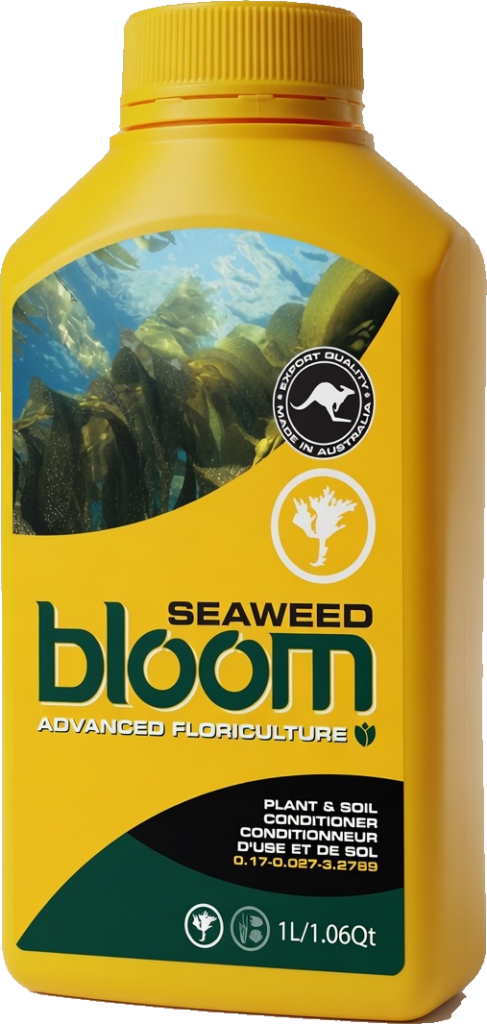
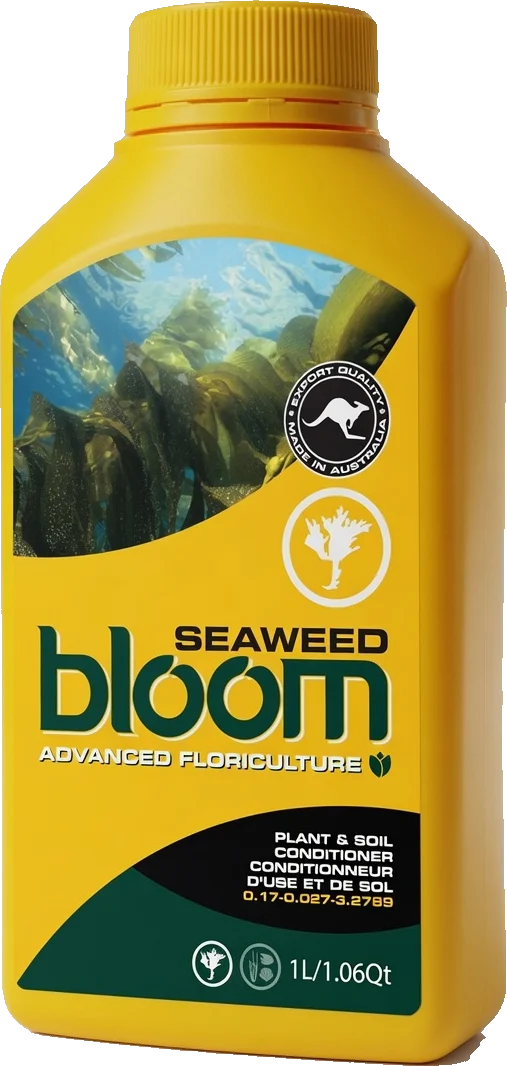
None of this is an argument that silicon doesn’t matter — the agronomy behind it is solid and the responsive-crop list is real. It’s an argument for matching the claim to the scale it was actually measured at. Bloom’s seaplant-based potash input, SEAWEED, declares exactly what it is and isn’t: 0.17-0.027-3.278 from a single named input, Durvillaea potatorum, run at a measured foliar or fertigation rate. It’s a declared nitrogen-and-potash contributor, not a silicon source, and it doesn’t claim to be one — which is the honest baseline every trace-element pitch should be measured against before a drop goes anywhere near a prized pot.
The pattern holds for other “beneficial elements” too
Silicon isn’t the only element that gets marketed at a scale mismatched to its own research. Cobalt is a genuine, documented requirement for the nitrogen-fixing bacteria that live on legume roots — but the corrective rate in the literature runs from about 1.8 to 145.6 grams per hectare, which is a precision micronutrient intervention, not something that belongs in a bulk “full-spectrum” mineral blend measured in milliliters per gallon. The two elements make the same point from opposite directions: where silicon needs tons per acre to move the needle, cobalt needs grams per hectare — and neither number looks anything like a dropper-bottle dose. The common thread isn’t the specific element, it’s that a real beneficial-element effect comes with a real rate attached, and a product that can’t tell you that rate usually can’t tell you much else about what it’s actually delivering, either.
That’s a useful filter for any supplement aimed at a collection of prized small pots: ask what the rate was in the research behind the pitch, and what unit it was measured in. If the answer is tons per acre or grams per hectare, a few drops in a watering can isn’t reaching that number — and if there’s no rate given at all, that’s worth noticing too. It’s also worth asking which of the two industrial routes made the potassium silicate in the bottle in the first place, since the label rarely says.
Sources: Heckman J. Silicon Needs of Soils and Crops. Fact Sheet FS1278, Rutgers New Jersey Agricultural Experiment Station (2017). Taucher J, Bach LT, Prowe AEF, et al. Enhanced silica export in a future ocean triggers global diatom decline. Nature 605(7911):696–700 (2022). Guaranteed analysis per Bloom SEAWEED label artwork.