
Slice open a leaf, scrape out the gel, rub it on a cutting — it’s one of the most-repeated rooting tricks in home gardening, passed along as settled fact. The honest answer is more modest: a couple of small trials hint that aloe might help some cuttings root, and a closer look at what’s actually in the gel explains why nobody has turned that hint into a reliable method yet.
What the gel is actually made of
Aloe gel runs about 99% water. The remaining 1% is a genuinely interesting mix — amino acids and hormones including auxins and gibberellins are present, but the research describing them does so without quantifying how much. One compound gets the most attention, acemannan, a polysaccharide that’s structurally fragile: its acetyl groups are sensitive to light, oxygen, storage time, pH, and dehydration temperatures above 60°C, and overall composition shifts with “cultivars, plant maturity, environmental conditions, and seasonal changes.” A leaf cut from the same plant in a different month isn’t guaranteed to give the same gel.
The trial everyone cites, read carefully
The most-cited rooting figure for aloe comes from a pomegranate-cutting study: aloe vera gel produced 100% rooting, a traditional fermented preparation called panchagavya also hit 100%, commercial IBA rooting hormone reached 93.3%, untreated cuttings rooted at 66.7%, and garlic and banana treatments actually came in below the untreated control. That looks decisive until you read the methods: 10 cuttings per treatment group, 60 cuttings total, one greenhouse, one season — and the paper doesn’t specify what concentration of aloe gel was used, how it was prepared, or how long cuttings soaked in it.
At 10 cuttings per group, the entire gap between aloe’s 100% and IBA’s 93.3% is one cutting. And two of the “natural” treatments — garlic and banana — scored worse than doing nothing at all, which is the kind of result that usually signals noise in a small sample rather than a real effect running in either direction. A single small trial with an unspecified dose isn’t a result you can build a method on; it’s a result worth repeating properly before anyone treats it as settled.
n = 10 per group
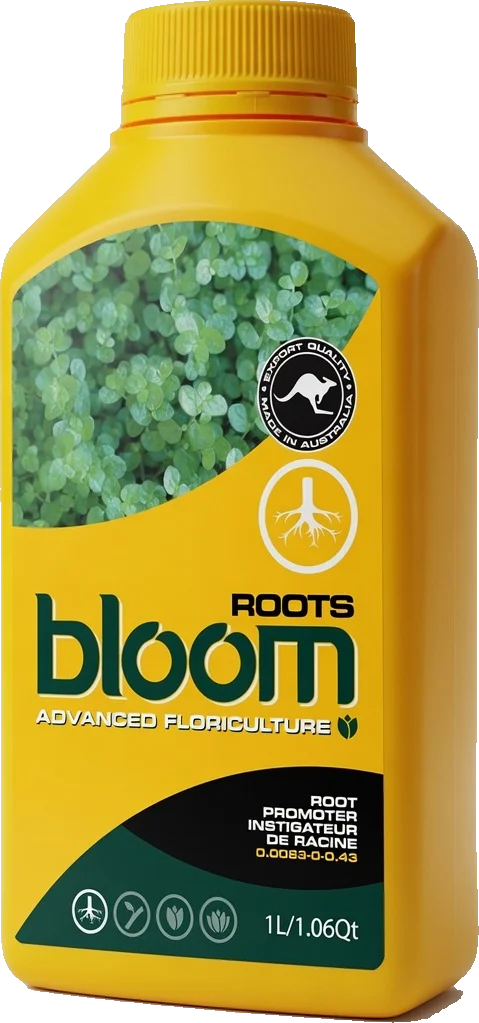
None of this means home gardeners imagined a real effect out of nothing — it means the evidence hasn’t caught up to the folklore yet, and the composition issue (unquantified actives, a fragile main compound, seasonal variability) explains why nobody’s been able to turn “aloe seemed to help” into a repeatable rate the way a labeled rooting product can. Bloom ROOTS, by contrast, declares exactly what’s in the bottle and at what concentration — 0.0083-0-0.43 from a named seaplant extract, with a stated rate rather than a leaf and a guess. That’s the practical difference between a home remedy and a product: one of them tells you what you’re actually applying.
Why the same gap shows up across home rooting remedies
Aloe isn’t the only kitchen-cabinet rooting trick that runs into this problem. The pattern repeats across most of them: a plant part gets cut, mashed or steeped, the resulting liquid gets applied by eye, and the actual concentration of whatever active compound is doing the work — if one is doing the work at all — is never known, let alone controlled for season, cultivar or how long it sat before use. That’s not a knock on the people trying it; it’s just a structural limit of working from raw plant material instead of a declared concentration. A home gardener who wants to know whether something worked has no real way to separate the remedy’s effect from normal cutting-to-cutting variation, because nothing about the input was held constant.
That’s also why “it rooted for me” and “it didn’t do anything for me” can both be true reports about the same remedy from two different gardeners in the same season — the gel, the cutting, and the conditions were never actually the same thing twice. A declared product removes exactly one variable from that picture: what’s in the bottle and how much of it is going on. Everything else about plant propagation still takes patience and a decent cutting to start with, but at least one part of the equation stops being a guess.
Sources: Matei CE, Visan AI, Cristescu R. Aloe Vera Polysaccharides as Therapeutic Agents. Polysaccharides 6(2):36 (2025). Aryan S, Gulab G, Safi Z, et al. Enhancement of Propagation Using Organic Materials and Growth Hormone: pomegranate cuttings. Horticulturae 9(9):999 (2023). Guaranteed analysis per Bloom ROOTS label artwork.